

Blog
DO YOU BELIEVE IN MIRACLES?

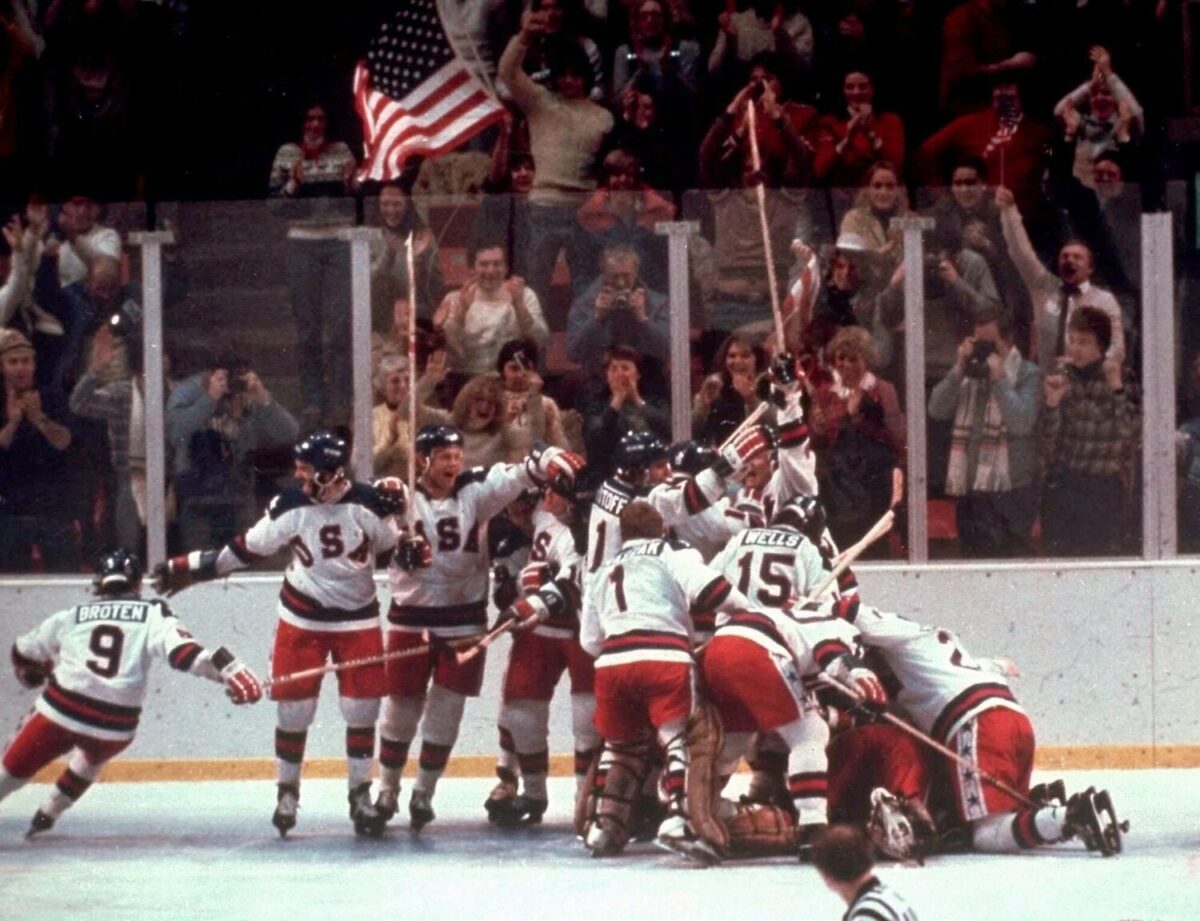
A Cold Winter Night in February of 1980
On Friday, February 22, 1980, I went to my girlfriend’s house for dinner after work. She made a nice meal, and afterward we sat down to watch the Olympic Games. ABC was televising the American hockey team playing against the Soviet Union.
What we didn’t know at the time was that the game had been tape-delayed. It had actually started about two hours earlier.
I can’t say I had any particular affinity for the Olympics—or even hockey—but everything else on television was a rerun. So we settled into her parents’ living room to watch. I say sat down, but never one to miss an opportunity to lie down, I stretched out on the floor, my head propped on a couch pillow.
The game was called by Al Michael’s, with analysis from the late Ken Dryden, the recently retired goalie from the Montreal Canadians—and one of the greatest goaltenders in hockey history. As it turned out, they were two inspired and historic choices.
Dryden’s insights were especially sharp. As a former goalie, he provided expert analysis of the play in net, offering astute observations on Team USA’s Jim Craig and the Soviet legend Vladislav Tretiak, whom Dryden matter-of-factually called the best goalie on Earth.
If you were alive in 1980, you’ll remember just how bleak things felt when the Olympics rolled around.
- Interest rates hovered between 15 and 20 percent. I felt that personally, having just bought my first house at 18 percent, financed privately by a woman who allowed me to pay interest monthly—along with a massive balloon payment waiting at the end.
- The lingering effects of the 1979 energy crisis meant long gas lines, high prices, rationing, and occasional fights at the pumps.
- Fifty-two American diplomats and citizens were being held hostage in Iran, more than 100 days into captivity.
- The Soviet invasion of Afghanistan had reignited Cold War tensions. President Jimmy Carter would respond by boycotting the Moscow Olympics later that year.
- America had already endured Vietnam, Watergate, economic downturns, and widespread layoffs. Many genuinely feared the nation’s best days were behind it.
Against that backdrop, Michael’s and Dryden carefully explained just how enormous the Soviet hockey machine was.
The Soviets were four-time defending gold medalists, winners of five of the last six Olympic tournaments. Over the previous four Olympics, they had compiled a record of 27 wins, 1 loss, and 1 tie, outscoring opponents 175–44. They hadn’t lost an Olympic game since 1968. Four players from that roster would eventually be inducted into the Hockey Hall of Fame.
They were professionals in all but name, a virtual shoo-in for gold.
Standing in their way was a rag-tag group of American college kids.
Team USA’s average age was 21, the youngest Olympic hockey team ever assembled. Only four players had any minor-league experience, and even that was limited. Both teams entered the medal round undefeated – just another tournament for the Soviets, and an entirely new world for Herb Brooks and his boys.
Brooks, fresh off a national championship at the University of Minnesota, was a demanding taskmaster. He befriended no one and pushed his players harder than they had ever been pushed. After a disappointing exhibition tie against Norway, he famously kept the team skating sprints late into the night—long after the arena had emptied. When it was over and the vomiting stopped, several players considered quitting.
As the game started, Michael’s’ narration slowly pulled me in. By the end of the first period, the game was tied 2–2, with goals by Buzz Schneider and Dave Christian.
The Soviets scored the only goal of the second period, and the Americans headed into the third down 3–2. Craig was playing out of his mind, turning away wave after wave of Soviet shots.
This was getting interesting.
Early in the third, Mark Johnson scored on a power play to tie the game. A few minutes later, Mike Eruzione gave Team USA a 4–3 lead with ten minutes remaining.
It was the longest ten minutes in sports history.
The Soviets attacked relentlessly. The Americans somehow held on. As the final seconds ticked away, Michael’s delivered a call that would echo through history:
“Eleven seconds… you’ve got ten seconds… the countdown going on right now! Morrow, up to Silk! Five seconds left in the game! It’s over! Do you believe in miracles? YES!”
Aftermath
I lay there on my future father-in-law’s living room carpet and cried quietly like a baby. I couldn’t scream and holler as I felt because her parents came home and were watching television in the next room.
I got goosebumps just typing this.
I’ve since watched the Bulls, Blackhawks, Cubs, and Packers win championships—but none of them ever matched the pure electricity of that night. In 1999, Sports Illustrated named the “Miracle on Ice” the greatest sports moment of the 20th century.
Two days later, the Americans beat Finland 4–2 to win the gold. I watched that game too, though I don’t remember where I was sitting or who I was with. Probably my future wife.
What I remember is lying on a living room floor on a Friday night, discovering that sometimes the rerun is better than the live broadcast.