

Blog
THE LAST MANUSCRIPT OF ROBERT MORGAN

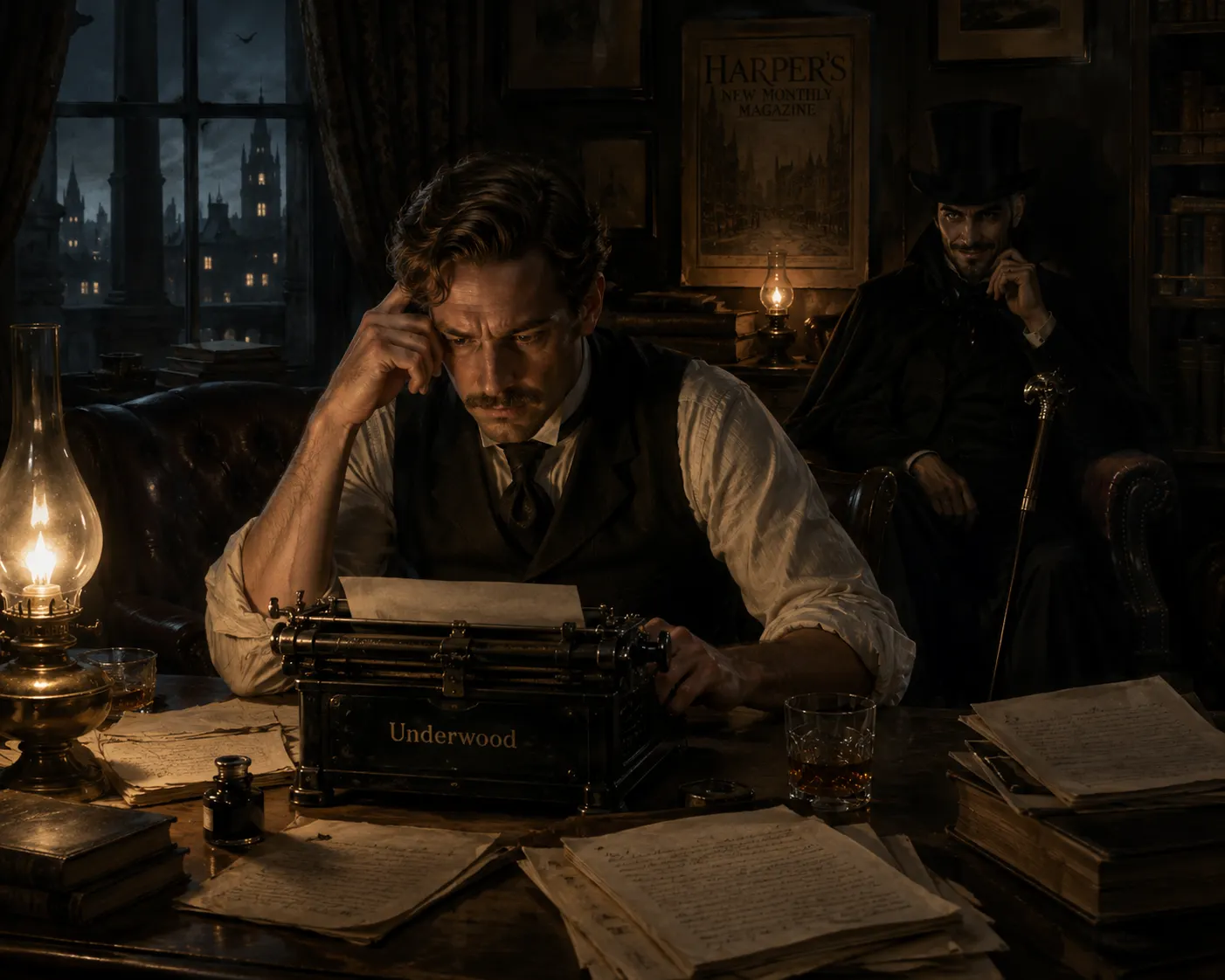
A Tale of Ambition and Temptation, and the Devil’s Bargain Behind American Literary Fame
Part 1 – Harper’s Magazine
“I have no special regard for Satan; but I can at least claim that I have no prejudice against him. It may even be that I lean a little his way, on account of his not having a fair show.” – M. Twain
Robert Morgan was delighted to see that his latest issue of Harper’s Magazine had arrived in the post. At 164 pages, it resembled a book more than a magazine, which Robert greatly appreciated. At twenty-five cents, it was a bargain, providing enough reading material to occupy him for nearly a week.
Robert loved to read. He devoured every book, newspaper, and magazine he could get his hands on. At times, he fancied becoming an author himself someday — perhaps when he retired or finally found the leisure for such pursuits.
He had eagerly anticipated this particular issue, as one of his favorite authors, Mark Twain, was featured prominently in the September 1899 edition.
Given Twain’s larger-than-life reputation in New York, he was surprised that Harper’s had placed Leila Herbert’s article on George Washington ahead of Twain’s contribution on the cover.
Settling onto the davenport, he began reading Madame Herbert’s account while his manservant, James, brought him coffee. Mrs. Morgan had not yet come downstairs.
When he finished the article, he had to admit that Madame Herbert had written an excellent piece.
The next story, Misther Kilgar of Athlone by Seumas MacManus, was less impressive. Eager to reach Twain’s commentary, he skipped over Doctor Henry Smith Williams’ essay, intending to return to it later.
Twain’s article bore the provocative title Concerning the Jews. It was precisely the sort of piece Robert had come to expect from Twain — sardonic, morally skeptical, and intentionally inflammatory.
The essay suggested that humanity condemned Satan without ever hearing Satan’s side of the matter, a notion certain to unsettle any God-fearing reader.
As he read, he found himself deeply troubled. A devout church member, he wondered if Twain’s arguments bordered on outright blasphemy.
Yet perhaps he should have expected no less. Twain cultivated controversy as deliberately as other men cultivated gardens. Robert suspected it was how the aging author continued to command public attention long after the publication of his greatest works.
Gone was the youthful innocence of Tom Sawyer and Huckleberry Finn. In its place stood an older, more cynical Twain — skeptical of religion, morality, and perhaps even God Himself.
By the time Robert finished the article, he found himself genuinely wondering whether Twain truly believed the Devil deserved sympathy.
❦
Part 2 – The Meeting
Later that evening, after Mrs. Morgan retired for the evening, Robert poured himself a brandy and retired to his den to reread Twain’s words. He was nearly finished when he thought he detected movement.
He looked up — and froze.
Standing in the doorway was an impeccably dressed gentleman clad in a black cape and top hat, a silver-handled cane resting lightly in one gloved hand.
His suit was of the finest material, accented by a crimson necktie. His polished black shoes gleamed in the firelight.
The stranger wore a neatly trimmed beard and mustache, both dark as coal save for a streak of white descending one side of his face.
Yet it was the man’s eyes that held Robert captive.
They burned with unnatural intensity, alive with some terrible energy he could neither describe nor comprehend.
“How the blazes did you get in here?” Robert exclaimed, yanking open his desk drawer. “And what do you want?”
The instant Robert reached for his pistol, the stranger’s cane lashed out with astonishing speed. Pain exploded through his arm. He cried out and dropped the revolver onto the floor.
“You will not require that, sir,” the intruder said calmly. “I mean you no harm.”
His voice was low, rough, and strangely resonant.
“No harm?” he gasped, clutching his arm. “I believe you may have broken it! Who… what are you?”
The stranger smiled faintly.
“Most people call me Lucifer,” he replied. “Though I suspect you had already guessed as much.”
Lucifer smiled faintly, retrieved his cane, and glided to the chair opposite Robert’s desk. The man scarcely seemed to walk at all. His movements possessed an unnatural smoothness, as though the floor itself carried him forward.
“What do you want, then?” Robert stammered, still rubbing his arm.
“First, I would ask you to relax,” Lucifer said as he settled into the chair. “I have no intention of harming your person, your family, or your home. I merely wish to have a conversation.”
Robert forced himself to meet those strange, burning eyes.
“Then out with it.”
Lucifer tilted his head slightly.
“I understand you are a devoted admirer of my old friend, Mr. Clemens.”
“I am an admirer of Mr. Twain’s work,” Robert replied cautiously. “But what has that to do with your visit here?”
“In due time, Mr. Morgan.”
“Well sir, I would prefer that time be now.”
For the first time, Lucifer’s expression darkened slightly. He rested both hands atop the silver handle of his cane.
“This conversation would proceed much more pleasantly were you to abandon this hostility. As I have already stated, I mean you no harm.”
Robert exhaled slowly and eased back into his chair.
“Very well,” he muttered. “Say what you came to say.”
Lucifer nodded approvingly.
“I understand that you harbor ambitions beyond the railroad. That you aspire, perhaps secretly, to become an author yourself.”
Robert felt the blood drain from his face. He had never spoken such thoughts aloud — not even to Mrs. Morgan.
“How in God’s name—”
Lucifer raised one gloved finger.
“Careful, Mr. Morgan. Let us not invoke your Employer unnecessarily.”
Robert swallowed hard.
“No sir,” he replied defensively. “I have never expressed such a desire to anyone.”
“Expressed? No. But desired?” Lucifer leaned forward slightly. “That is another matter entirely.”
Robert hesitated. Was this some infernal test? How could this stranger possibly know of thoughts he himself scarcely dared acknowledge?
“At times,” Robert admitted reluctantly, “I have considered it.”
Lucifer smiled again, though this time the expression carried something almost paternal.
“Excellent. You see how agreeable matters become once hostility leaves the room and honesty enters?”
Robert frowned. The truth was he wished no part of this conversation. If this man truly was the Devil — and Robert increasingly feared he was — then merely entertaining such discourse might itself imperil his immortal soul.
“I fail to see what business we have with one another,” Robert said firmly. “Indeed, sir, I believe it best that you leave this house immediately.”
Lucifer chuckled softly.
“If that were truly your desire, Mr. Morgan, you would have demanded my departure the moment I arrived.”
The Devil crossed one leg over the other.
“No. What restrains you is not merely fear, though fear is wise where I am concerned. It’s curiosity. You wish to know whether I possess the means to grant the thing you have secretly desired for years.”
Robert said nothing. The silence itself became an answer.
“At last,” Lucifer murmured. “Now we may speak plainly.”
Robert’s mouth had gone dry.
“What is it you claim you can do?”
Lucifer’s eyes seemed almost to glow in the firelight.
“Mr. Morgan, it is within my power to bestow upon certain men the fulfillment of their deepest ambitions. Even immortality.”
He paused to light a cigar.
“How else do you imagine Mr. Twain became known throughout the civilized world?”
The remark struck Robert like a blow. It echoed aloud a suspicion Robert himself had entertained more than once during moments of private irreverence. Could such greatness truly come at so terrible a price?
And if it could…
…what precisely was the cost?
Robert opened his mouth to ask the question, but Lucifer raised one gloved hand before he could speak.
“I know precisely what you are about to ask,” he said softly. “And the answer, Mr. Morgan, is not what you think.”
“Out with it then, sir,” Robert demanded.
Lucifer smiled faintly.
“Mr. Morgan, I offer men nothing they do not already desire. Your God grants virtue. I merely grant opportunity.”
Robert considered the remark carefully.
He had long envied the enduring power of Twain’s works — the way the author’s words would likely survive long after both reader and critic had turned to dust. Robert himself dreaded such obscurity. To die merely as a railroad business manager, soon forgotten by all save his widow and a few associates, struck him suddenly as intolerably bleak.
Lucifer interrupted his thoughts.
“You see, Mr. Morgan, no man truly desires wealth as much as he desires remembrance. To be remembered is the nearest thing mortals possess to immortality.”
Robert said nothing.
“Have I made myself understood?”
“Go on,” Robert replied cautiously, unwilling to answer directly.
Lucifer leaned back comfortably in the chair.
“Is further explanation truly necessary?”
“I am uncertain precisely what it is you want from me.”
“Oh, I believe you understand far more than you wish to admit.”
Robert felt a tightening in his chest.
The desire to write as some of the greatest authors had begun to overpower his fear. To possess the ability to move men with words as Twain had done seemed almost intoxicating.
Yet the cost remained unspoken.
“Perhaps,” Lucifer continued smoothly, “we should begin with something modest. Submit a piece to Harper’s. A rebuttal to Mr. Twain, perhaps. Not the hysterical condemnations presently filling the newspapers, but a thoughtful and intelligent response.”
Robert considered the suggestion. A rebuttal. Not angry sermonizing, but genuine prose. Measured, articulate and literary. Did he possess such ability?
“Of course you do,” Lucifer said with a smile.
Robert stiffened. The Devil had answered the thought before it was spoken.
At that moment Mrs. Morgan appeared in the doorway.
“Robert, my dear, I came down for a glass of water and thought I heard voices.”
Robert turned instinctively toward Lucifer’s chair — and found it empty.
“No, my dear Lydia,” Robert answered quickly. “I was merely reading aloud. I apologize if I disturbed you.”
“Well, do try not to argue with magazines at this hour,” she replied sleepily. “You’ll wake the household.”
“I shall come up shortly.”
She smiled faintly and disappeared down the hallway.
A moment later Lucifer reappeared in the chair as though he had never left it.
“Relax,” he said calmly. “She could not see me. In truth, Mr. Morgan, I never departed at all.”
Robert stared at him in mute astonishment.
“I believe our business is concluded for this evening,” Lucifer continued, rising smoothly from the chair. “Retire upstairs. Write your rebuttal. Submit it to Harper’s. Then we shall see whether your ambitions are equal to your appetites.”
“And after that?” Robert asked quietly.
Lucifer retrieved his cane.
“After that, Mr. Morgan… you may make an informed decision.”
❦
Part 3 – And So It Begins
The following day being Saturday, Robert was free from railroad obligations. After breakfast he took a long walk through the city, replaying the previous night’s events repeatedly in his mind.
Had the encounter truly happened? The pain still lingering in his arm suggested it had.
The moment he returned home, he went directly to his office and seated himself before his Underwood machine. For hours the relentless clacking of the keys echoed through the house. His lunch had been served but went uneaten.
Pages accumulated beside him while others, deemed unsatisfactory, were crushed and hurled into the wastebasket. A few had even made its way to the floor.
For hours the relentless clacking of the keys echoed through the house. His lunch had been served but went uneaten.
By evening, Robert possessed a completed draft. After dinner he poured himself a brandy and sat alone beside the lamp to reread what he had written. To his astonishment, it was good. Not merely competent, but genuinely thoughtful and persuasive.
For the first time in years, Robert felt something dangerously close to pride.
Perhaps the Devil had done nothing at all. Perhaps Lucifer had merely awakened something already dormant within him.
That realization comforted Robert more than it should have.
By the following Monday morning, the manuscript — a carefully reasoned rebuttal to Mark Twain’s Concerning the Jews — had been sealed and mailed to Harper’s on his way to work.
Now there remained nothing to do but wait.
Several weeks later, a letter arrived bearing the return address of Harper’s Magazine. Robert opened it with trembling hands.
Inside was a brief note from George Pickens, Editor at Large, expressing admiration for the article and informing Robert that Harper’s intended to publish the piece in an upcoming issue.
Enclosed was a check for twenty-five dollars.
Robert read the note three times in disbelief. His rebuttal had not merely been accepted. He had been paid.
That evening he celebrated with Lydia over dinner, though he revealed little regarding the strange visitor who had inspired the article.
The publication of the rebuttal brought Robert a modest degree of attention among Harper’s readership. A few letters followed. Then came invitations to literary dinners and correspondence from readers who praised the intelligence and restraint of his argument.
For the first time in his life, Robert began to imagine that authorship might truly lie within his reach.
And then Lucifer returned.
“Your article was very well received,” Lucifer remarked casually from beside the fireplace.
Robert, though startled by the sudden appearance, no longer reached for the revolver.
“It seems Harper’s found merit in my opinions.”
Lucifer smiled faintly.
“Yes, but opinions alone rarely secure immortality.”
Robert frowned.
“What is it you want from me now?”
The Devil’s eyes drifted toward the shelves lining the study walls.
“A novel, Mr. Morgan.”
Robert laughed uneasily.
“I have never written a novel in my life.”
“Not yet.”
Lucifer retrieved a baseball from the desk — one Robert kept as a souvenir from a company outing — and turned it slowly in his gloved hands.
“America worships two things above all others,” Lucifer said. “Celebrity and nostalgia. Combine them properly and men will call it literature.”
Robert studied him carefully.
“You already have a title in mind, don’t you?”
Lucifer smiled.
“Bottom of the Ninth.”
❦
Part 4 – The Novel
Over the next two years, Robert submitted chapter after chapter of Bottom of the Ninth to Harper’s. Bottom of the Ninth became nothing short of a national sensation.
Circulation for Harper’s nearly doubled during the serial’s run. George Pickens increased Robert’s payment to one hundred and fifty dollars per chapter and promised an additional five hundred dollars upon completion of the novel.
Mounted beneath the framed check from his first published piece hung a personal note from Mark Twain congratulating him on the success of the novel. Twain had called the work “a real dandy.” Robert treasured the note above all his other accomplishments.
Robert Morgan had become a celebrated name. And yet, with success came pressure. The novel was nearing its conclusion.
The public waited anxiously to discover how the celebrated author, Robert Morgan, intended to end his masterpiece. For Robert himself, however, the task had become unexpectedly difficult.
The earlier chapters had flowed with astonishing ease, arriving almost effortlessly beneath his fingertips at the Underwood machine. But now, facing the conclusion, he found himself hesitating. Doubting. Revising endlessly.
It was well past midnight.
Lydia had long since retired upstairs while Robert remained seated before his Underwood, the steady clacking of the keys echoing through the darkened house.
At last, pausing to gather his thoughts, he glanced up from the typewriter—
—and froze.
Lucifer sat calmly on the opposite side of the desk smiling at him.
“Your work is receiving international acclaim, Mr. Morgan,” he said softly. “Precisely as I promised.”
Robert chose his reply carefully. Though he had come to believe the work entirely his own, he had no desire to offend the man seated before him.
“Are you suggesting I received assistance with the manuscript?” Robert asked cautiously.
The smile vanished from Lucifer’s face.
“Did you truly imagine yourself capable of producing such prose so early in your literary career?”
Robert stiffened.
“Yes,” he answered firmly. “I do. You have not appeared once during the past two years while I labored over every chapter.”
“Labored?” Lucifer repeated mildly.
“Yes.”
The Devil leaned back slightly in his chair.
“And what precisely was your labor, Mr. Morgan?”
Robert frowned.
“I wrote the novel.”
“You typed the novel,” Lucifer corrected softly.
Robert felt heat rise into his face.
“I most certainly did more than type it.”
Lucifer regarded him almost sympathetically.
“Do you imagine I compose literature myself? No, Mr. Morgan. I merely remove certain barriers. I open doors through which lesser men occasionally glimpse greatness.”
Robert said nothing.
The Devil’s eyes drifted toward the towering stack of completed manuscript pages resting beside the Underwood.
“You served admirably as the instrument.”
The remark struck Robert like a slap. Inside, anger boiled violently, though he dared not show it.
“Tell me, Mr. Morgan,” Lucifer continued, “this final chapter you are presently composing… these are entirely your own words, are they not?”
“They are.”
“Excellent.”
Lucifer rose smoothly from the chair and retrieved his cane.
“Then submit the completed chapter to your wife for editing and observe her reaction carefully.”
❦
Part 5 – Realization
Before Robert could respond, Lucifer vanished. The office fell silent save for the ticking of the mantel clock. He sat motionless for several moments, trembling with indignation. The arrogance of the creature.
To claim ownership over his work after all the endless nights he had sacrificed before the typewriter. No. The novel was his. His alone.
Fueled by anger, Robert worked through most of the night completing the final chapter. By morning, exhausted but satisfied, he handed the manuscript to Lydia before departing for work.
They spoke again that evening over dinner. Lydia remained unusually quiet throughout the meal.
At last Robert set down his fork.
“Well?” he asked impatiently. “What did you think?”
She hesitated.
“Robert… what happened?”
He frowned.
“What do you mean?”
Lydia gently placed the manuscript beside his plate.
“After all those marvelous chapters… after such beautiful writing… this ending feels as though it were written by an entirely different man.”
Robert glanced downward. The pages were covered in corrections. There were more edits upon the first sheet alone than Lydia had made throughout the entirety of the novel.
“What exactly have you done to it?” Robert demanded sharply.
“Only what you asked of me,” Lydia replied quietly. “Grammar, spelling, punctuation. But Robert…” She looked at him sadly. “The chapter itself simply is not very good.”
The words cut deeply.
“This cannot be the same man who wrote the rest of the book,” she continued. “Those earlier chapters possessed such confidence… such elegance. This ending feels rushed. Ordinary.”
Ordinary. The word echoed in Robert’s mind like a funeral bell.
At that terrible moment, he finally understood. The brilliance had never truly belonged to him. He had merely been the typist.
Worse still, if he wished to preserve the admiration of his readers — the fame, the acclaim, the intoxicating sense of immortality now wrapped around his name — he would need Lucifer again.
The realization horrified him.
“I must have been tired,” Robert muttered weakly. “I shall rewrite the chapter tomorrow.”
Lydia nodded gently, though her expression remained troubled. She patted his hand.
Robert stared silently at the manuscript.
As he had done throughout the writing of the novel, Robert poured himself a brandy before sitting down behind the Underwood machine to await inspiration for the final chapter.
Nothing came. The typewriter seemed almost to accuse him in the silence, its black keys waiting impatiently beneath the glow of the lamp.
Still nothing. Then Lucifer appeared.
“What troubles you, Mr. Morgan?” the Devil asked calmly. “Why are you not finishing your masterpiece?”
Robert looked up bitterly.
“You bastard,” he hissed. “I was never the author at all. I was merely the typist. And now, when greatness is finally within my grasp, you abandon me.”
“Abandon you?” Lucifer replied mildly. “Surely not. You insisted the words were entirely your own. You were quite determined to prove it with this final chapter.”
Robert lowered his head into his hands. He could already envision the collapse awaiting him. The admiration. The acclaim. The intoxicating reverence of strangers. All of it would vanish the moment the final chapter disappointed the public.
Lucifer studied him quietly.
“I have a suggestion,” he said at last. “Miss the deadline.”
Robert looked up sharply.
“Let them wait. Deny them their conclusion for a month and observe what occurs when the public is deprived of something it believes it owns. Then you and I shall continue our discussion.”
And so Robert did exactly that. He stopped writing.
❦
Part 6 – The Deadline
“Robert, you missed your deadline,” Lydia remarked over breakfast several mornings later. “Whatever for?”
Robert stirred his coffee absently.
“The truth is, my dear, after your criticism of the last chapter, I have thus far been unable to produce a conclusion worthy of the novel.”
Lydia opened her mouth to reply, but Robert continued.
“Besides, I confess myself curious regarding the public response. If no reaction comes of this delay, then perhaps the work was never as important as I imagined. In that case, there would be little reason to continue.”
“And if there is a reaction?” Lydia asked.
Robert looked away.
“Then perhaps the novel means more than merely a passing diversion.”
Lydia regarded him suspiciously but said nothing further.
That afternoon a telegram arrived from George Pickens.
- MORGAN
MISSED DEADLINE FOR FINAL INSTALLMENT STOP
PLEASE ADVISE IMMEDIATELY STOP
— G PICKENS
Robert left the telegram unanswered upon his desk.
❦
Part 7 – At the Crossroads
For the first time in his life, he understood that he stood at a genuine crossroads.
The public outcry was immediate and overwhelming. Letters flooded the offices of Harper’s. Readers from across the nation — and even London — demanded the conclusion to what newspapers had begun calling the literary sensation of the year.
Some accused Harper’s of deliberately withholding the final chapter to increase circulation. Others threatened to cancel subscriptions entirely unless the conclusion appeared in the next issue.
A second telegram soon arrived. This one bore the signature of Ralph Tyson, Editor-in-Chief of Harper’s.
- ROBERT MORGAN
PUBLIC DEMAND FOR FINAL INSTALLMENT EXTRAORDINARY STOP
HARPER’S PREPARED TO OFFER FIVE HUNDRED DOLLARS FOR FINAL CHAPTER IN ADDITION TO PREVIOUS BONUS STOP
REQUEST PERMISSION TO VISIT YOUR RESIDENCE TO DISCUSS FUTURE ARRANGEMENTS STOP
— RALPH TYSON
Robert read the telegram several times in disbelief.
The magnitude of the response exceeded even his most ambitious fantasies.
At the railroad office, fellow employees now treated him with something approaching reverence. Neighbors stopped him on the street to praise his brilliance. Even Lydia had begun looking upon him differently — with a mixture of admiration and uncertainty.
The temptation was becoming unbearable.
That afternoon Robert composed a formal reply upon his personal stationery.
Dear Mr. Tyson,
I received your telegram concerning the final installment of Bottom of the Ninth. Please rest assured that I am laboring diligently to provide a conclusion worthy of both your publication and its devoted readership.
I confess the task has proven more formidable than originally anticipated, though I remain confident the completed chapter shall soon be in your possession.
My wife and I would be honored to receive you at our residence next Monday morning at nine o’clock should you still wish to discuss the matter further. Mr. Pickens is already acquainted with our address.
I trust by then to present you not only with the completed conclusion, but also to discuss future literary endeavors.
Yours faithfully,
Robert Morgan
The letter bought him time. The railroad even granted Robert temporary leave so that he might devote himself fully to completing the chapter.
Yet by Wednesday evening he had still failed to produce a single acceptable page.
Not one sentence.
Now he wondered whether Lucifer had withdrawn the gift intentionally — whether the Devil who had once opened the door to greatness had now deliberately slammed it shut.
Late that night, after dinner and too much brandy, Robert sat once more before the silent typewriter.
And then Lucifer appeared in his customary chair.
“I understand the public outcry surrounding your missed deadline has been considerable,” Lucifer began calmly.
“You knew that would happen,” Robert sneered.
“Yes,” Lucifer replied. “I did.”
He crossed one leg over the other and rested both gloved hands atop the silver handle of his cane.
“And now, Mr. Morgan, you find yourself in a rather difficult position. By Monday morning, you must either produce a worthy conclusion… or disappoint an entire readership.”
Robert glared at him across the desk.
“So what is it you truly want from me?”
Lucifer smiled faintly.
“Nothing more than to remain your humble servant for the remainder of your earthly years.”
The remark chilled Robert far more than any threat could have.
“My earthly years?”
“Of course,” Lucifer answered pleasantly. “You possess the makings of several more successful novels, I suspect. Great works even. Why should Bottom of the Ninth be your only triumph?”
“And if I refuse?”
Lucifer shrugged lightly.
“That decision rests entirely with you. But you should understand the consequences clearly. Refuse my assistance, and your literary career likely concludes with this final chapter.”
Robert said nothing. Lucifer’s eyes drifted toward the unfinished manuscript resting beside the Underwood.
“Poor Mr. Wilde made much the same mistake.”
Robert looked up.
“Oscar Wilde?”
“Yes. An immensely gifted man. Brilliant, vain, reckless… but gifted nonetheless.”
“I know very little of him,” Robert admitted. “I have always preferred American authors.”
“Most Americans say the same until they secretly begin reading the English,” Lucifer replied dryly.
Despite himself, Robert almost smiled.
“What became of Wilde?”
Lucifer leaned back comfortably.
“Mr. Wilde misunderstood the arrangement entirely. He attempted to sever our association.”
“And?”
“Prison followed.”
Robert frowned.
“For what offense?”
“Gross indecency,” Lucifer replied dismissively. “Reading Gaol, four years ago. By the time he emerged, his reputation had been destroyed. Society discarded him almost overnight like the evening newspaper. Financial ruin soon followed.”
“And you claim no responsibility for that?”
“On the contrary,” Lucifer said softly. “I abandoned nothing, my good man. It was Mr. Wilde who chose to proceed without me. Had he remained sensible and kept to the pact, his life might have unfolded rather differently.”
Robert lowered his eyes.
“And now I find myself standing at the very same damnable crossroads.”
“Indeed you do, sir.”
Robert studied the Devil carefully.
“First Paganini… then Wilde… and now me?”
At the mention of Niccolò Paganini, Lucifer’s smile widened slightly.
“Ah yes. Poor Paganini. The man desired greatness so desperately he practically begged for my involvement.”
“He truly possessed such extraordinary skill?”
“Extraordinary?” Lucifer repeated. “When Paganini performed, audiences crossed themselves in fear. Not because they hated greatness, Mr. Morgan… but because they sensed something unnatural within it.”
The room fell silent.
“People have always suspected that true genius originates from somewhere beyond themselves,” Lucifer continued quietly. “They claim to admire greatness, yet what they truly admire is the illusion of perfection.
Robert stared uneasily at the unfinished pages.
“And what precisely would this arrangement require of me?”
Lucifer’s eyes fixed upon him as he leaned forward.
“Very little, Mr. Morgan. Only that when your final hour arrives… you do not deny me.”
❦
Part 8 – The Deal
The following Saturday afternoon, Robert gave the final chapter to Lydia for her editorial skills. Sunday morning found her raving about the ending as she handed the finished chapter to him.
“You did it, Robert. You pulled it off and with only one comma missing. I knew you had it in you.”
Robert listened to her words, yet he knew they rang hollow.
When Messrs. Tyson and Pickens called on them the following day, Lydia showed them to Robert’s office. James served them all coffee, then left, pulling the oak door shut behind him. The three of them sat across from Robert as he handed them the finished final chapter.
“I believe gentlemen, you will find this a worthy conclusion to the story,” Robert stated. “At least my wife believes you will.”
Lydia blushed at the mention of her fondness for his work.
“He pulled it off gentlemen,” she gushed.
“There was no doubt in my mind,” Mr. Pickens said. “Our readership will be enthusiastic, I’m sure.”
Mr. Tyson, a man of few word, agreed.
“And here is the remuneration we discussed, Mr. Morgan,” George said while handing Robert two envelopes. He was beaming.
Robert put the two envelopes in a drawer and looked back at his visitors without a word.
Mr. Tyson then spoke up. “Mr. Morgan, given what you have just delivered, we feel there are more good works coming our way if we can come to an agreement of our mutual satisfaction. If you will agree to allowing us the exclusive rights to just two more novels, we are prepared to offer you a sum of ten-thousand-dollars for your next novel. If that does as well as the first, we will increase that amount to twenty-thousand dollars for the following novel. If the second does not do as well, then we retain the right to lessen the amount to ten-thousand-dollars. In other words, you are guaranteed twenty-thousand-dollars regardless, but there is the potential for another ten-thousand-dollars as a bonus.”
Robert looked at the two men warily. It would more than likely take him another two to five years to live up to that bargain. Did he have that much time? As wonderful as the offer sounded, he was not convinced it was enough. If his work was that good, it might be worth more. He wondered if he should discuss it with that damned Lucifer or seek out advice from legal counsel.
After several moments of awkward silence, he replied.
“Gentlemen, I’m sure your offer is a good one. On its face, it certainly appeals to me. But you can understand that I will wish to seek legal counsel on the matter first.
“Of course,” said Mr. Tyson. “That is only a sound business decision. Here is my card, Mr. Morgan. Please let me know when you have made your decision.”
With that, Lydia showed the two men out, then practically ran back to Robert’s office.
“Oh, Robert, this is so exciting!”
“Yes, it is, my darling,” Robert replied, but showed no enthusiasm.
Robert was racked with guilt. He felt he committed a moral sin by accepting Lucifer’s assistance with The Bottom of the Ninth, but what other option did he have. If he was unable to deliver the final chapter he would open himself up to scorn, ridicule, and suspicion. It would be an embarrassment to both he and Lydia.
He wanted to be alone with his thoughts so he went for long walk.
❦
Part 9 – Success
For the next few weeks, Robert didn’t write at all. He spent his days at work with the railroad, and his nights at home reading with Lydia. Most weekend nights they dined out with friends. Lucifer had not contacted him either.
When the last chapter of the novel was released it was met with immediate overwhelming praise. Robert had delivered the perfect ending to one of the books of the year. Some compared it to the works of Dickens and Twain. The response was so good, he received a check in the mail in the amount of five hundred dollars from Harper’s as another bonus.
His hiatus from writing over, he now sat before his Underwood machine, waiting for the creativity to start flowing through his fingers. Unfortunately, the words weren’t coming, much like when he first tried to finish the last chapter of The Bottom of the Ninth.
Lucifer appeared in his normal spot.
“Good evening, Mr. Morgan,” Lucifer said.
Robert stared intently at the devil. His face was grim and pinched. His brow was furrowed. The fact was that this man now disgusted him. He despised him.
“What, pray tell, do you want now?” Robert said icily.
“I’m just paying you a visit as I hadn’t for a time. I see you are sitting at your Underwood machine. Getting ready to type up another epic novel?”
Robert sipped his brandy and stared, carefully contemplating his next response. He understood Lucifer was not a man to trifle with. He needed his help with the next novel, and perhaps any after that, but he was also scheming.
“Yes I am,” he said finally. “An historical fiction novel about Paganini.”
With the mention of the legendary violinist, which he had no intention of writing, Robert was testing the devils reaction.
There was no reaction, much to Robert’s dismay. The devil just smiled and congratulated him on his choice. The remark was no different that had Robert said he was going to write a story about painting his house.
“I have another topic I need to discuss with you if you have the time,” said Robert.
“Mr. Morgan,” Lucifer began with a small chuckle, “I have all the time you ever need. As I said earlier, I am your humble servant. I would imagine, sir, you are now in need of counsel for a contract for continuing with Harper’s to put your works, chapter by chapter,” Lucifer replied.
“Tell them you want twenty-thousand-dollars for the next novel, paid in installments of one-thousand-dollars per chapter for the first fifteen chapters, and then another five-thousand paid upon delivery of the final chapter. They will take the deal. But I would advise against becoming contractually obligated with them for anything after that. Your name is becoming a topic of discussion with various publishing houses. One of them might reach out, well most of them will, with a better offer.
With that, Lucifer stood, put his hands on Roberts desk and bent slightly forward. Robert could smell the devil’s rancid breath. The stench nearly made him ill.
“I saw right through that ploy earlier, Mr. Morgan. I don’t care about your topic, only to make the writing better and you to be paid handsomely for your services. I will check in with you weekly to see how you are faring.”
Lucifer disappeared. Was this a dream, Robert wondered. Once again he felt queasy.
Robert poured himself another brandy to settle his nerves and sat down to type. All at once, a bundle of energy gripped Robert and he began clacking away on his next novel.
❦
Part 10 – The Offer
Harper’s did take the deal as Lucifer predicted. It took Robert two years to complete the novel and it was another sensation. As promised, Lucifer made weekly visits, appearing at all hours, for brief discussions. Robert said little during these conversations, careful to not commit to anything further than he had.
As Lucifer predicted, Robert was getting offers from a variety of sources for his next novel. Harper’s had increased their offer to thirty-thousand-dollars for the next novel, Robert’s third. Colliers also sent him an offer of thirty-five-thousand-dollars, paid up front.
After discussing it with Lydia, he was about to accept Collier’s offer when he received a formal letter in the mail. It came from William Scribner, the grandson and current publisher of Charles Scribner’s & Sons Publishing in New York City.
Scribner was requesting a meeting with Robert and his wife at Delmonico’s, one of the prime restaurants in all of New York the following Wednesday. Scribner’s was the premier publisher at the time and he looked forward to what they had to say.
Robert and Lydia arrived right on time, finding Mr. Scribner seated at a table toward the back. Scribner was impeccably dressed. But what stood out the most was his uncanny resemblance to Lucifer, complete with cane, cape, and top hat. The resemblance bothered Robert, as he wondered if this Scribner fellow was actually Lucifer himself, playing both ends against the middle.
Robert peppered Scribner with questions, some that seemed odd. Lydia looked at him crossly, but that didn’t stop Robert’s comments. In time, Robert deduced Scribner was not Lucifer and the conversation became much more pleasant.
Scribner offered Robert fifty-thousand-dollars for publishing his next novel. If he would sign for two novels, they would pay him one-hundred-twenty-five thousand dollars. All monies would be paid up front.
Robert signed with Scribner’s before leaving the restaurant. Scribner gave him a check for twenty-five-thousand dollars as a retaining fee.
❦
Part 11 – Lydia
Robert would publish three more novels during his lifetime. Each became an immediate literary sensation.
Critics proclaimed him the greatest American novelist since Mark Twain, a claim that did not go unnoticed by Twain. Universities invited him to lecture. Wealthy socialites competed with invitations to his dinners. Publishers bid extraordinary sums merely for the privilege of printing his name upon a cover.
And through it all, Lucifer remained faithful to his weekly visits.
He appeared at all hours:
- beside the Underwood,
- near the fireplace,
- seated silently in the corner of railroad cars,
- once even watching from the rear pew during one of Robert’s public lectures.
Robert never grew accustomed to him.
Yet despite the Devil’s constant presence, life within the Morgan household remained outwardly pleasant for many years. Lydia continued reading Robert’s manuscripts before publication, correcting punctuation and gently tempering his excesses. Her quiet admiration grounded him more than he cared to admit.
As Robert’s fame increased, however, so too did the demands upon his time. Publishers summoned him constantly. Universities requested lectures. Literary dinners stretched late into the evening while interviewers and admirers consumed more and more of his attention.
Lydia rarely complained. But Robert gradually noticed a weariness settling over her. At first it was merely fatigue. Then came the coughing.
The physicians assured them it was nothing serious — a lingering winter ailment, perhaps exhaustion. Lydia herself dismissed the matter lightly and encouraged Robert to continue working.
But the illness worsened steadily.
By the autumn of 1911 she was confined almost entirely to her bed upstairs while Robert worked below in the study beside the endless clacking of the Underwood machine.
During those final months, Lucifer appeared less frequently. Robert often wondered whether even the Devil understood there existed certain griefs too sacred for intrusion.
One evening Robert abandoned the manuscript entirely and sat beside Lydia’s bedside long after midnight while snow drifted softly against the windows.
“You mustn’t stop writing on my account,” Lydia whispered weakly.
Robert took her frail hand carefully into his own.
“I would surrender every damned book for another twenty years with you.”
She smiled faintly.
“No, Robert. You wouldn’t.”
The words wounded him because they were true.
Lydia Morgan died quietly three days later with Robert seated beside her.
Lucifer did not appear at the funeral.
But Robert sensed him, nonetheless.
After Lydia’s passing, the house became unbearably quiet save for the endless clacking of the Underwood machine.
Robert withdrew almost entirely from society. Curtains remained drawn. Meals were brought directly to his office. Empty bourbon bottles accumulated beneath the desk beside crumpled manuscript pages. And through it all, Lucifer remained faithful to his weekly visits.
The fame continued. The joy did not.
❦
Part 12 – The Downfall
Years of inactivity and drink transformed him physically. His once-thin frame grew heavy. His face reddened from alcohol. Violent coughing fits interrupted his writing, sometimes leaving flecks of blood upon his handkerchief.
At last the physicians gave the illness its proper name. Consumption.
Robert accepted the diagnosis with surprising calm. For years he had feared death not because of pain, but because he understood precisely who awaited him afterward.
One winter evening, confined mostly to his bed, Robert finally acknowledged the truth he had spent years avoiding. Lucifer had never truly written his novels. Nor had the Devil created his ambition. The hunger for greatness had always existed within Robert himself, long before Lucifer first appeared in his office. The Devil had merely nourished it.
And worse still, Robert now understood that Lucifer possessed no power over any unwilling soul. The pact endured because Robert himself continued feeding it through vanity, pride, and the desperate desire to be remembered. That realization terrified him far more than Hell itself.
Scribner’s, still eager for another masterpiece, had recently advanced Robert one hundred thousand dollars for a final novel.
And so Robert began to write once more. But this time would be different.
The new manuscript was written slowly, painfully, and often in longhand from his sickbed. When Lucifer whispered elegant phrases into his thoughts, Robert deliberately ignored them. When beautiful sentences appeared effortlessly in his mind, he struck them out.
For the first time in decades, Robert labored honestly over every imperfect line.
The novel told the story of an author who traded his soul for literary greatness only to discover that fame itself had become his prison.
But the prose lacked brilliance. The dialogue occasionally faltered. At times the structure wandered badly.
But every word belonged entirely to Robert Morgan.
When the manuscript reached Charles Scribner’s Sons, the reaction proved catastrophic. Editors who once praised him now privately questioned whether age or illness had destroyed his mind. Reviews were merciless. Sales collapsed almost immediately.
One critic described the work as “the exhausted ravings of a once-great imagination.”
Robert read the review with relief. At last, his greatness was dying. And with it, perhaps, the bargain itself.
Then came the interview.
A reporter from The Saturday Evening Post visited Robert’s home during the final weeks of his illness.
The old author sat wrapped in blankets while snow drifted softly beyond the windows.
“Mr. Morgan,” the reporter asked carefully, “how does a man explain such a sudden collapse after years of brilliance?”
Robert studied the reporter before answering.
“With honesty, sir.”
The reporter waited silently.
Robert’s breathing had become shallow and uneven.
“At the height of my success,” he said slowly, “I convinced myself that admiration was the same thing as immortality. I was badly mistaken.”
The reporter scribbled furiously.
“Are you saying your success was fraudulent?”
Robert gave a faint smile.
“No, sir. Merely purchased at too terrible a cost.”
“And what cost was that?”
Robert’s eyes drifted toward the darkened corner of the room where Lucifer often appeared.
“The surrender of one’s better nature.”
The following week the interview appeared in print.
Literary circles erupted instantly. Readers debated whether Robert Morgan had gone mad from illness and alcohol. Publishers distanced themselves quietly. Invitations ceased. Book sales dwindled.
Robert welcomed every moment of it.
That night Lucifer appeared once more. For the first time in many years, the Devil no longer looked amused.
“You have destroyed yourself deliberately,” Lucifer said coldly.
Robert nodded weakly.
“Yes.”
“You possessed everything men spend their lives pursuing.”
“I know.”
Lucifer stared at the unfinished manuscript resting beside the typewriter.
“I never wrote a single word for you, Mr. Morgan. The greatness was always yours.”
“No,” Robert whispered. “The vanity was mine. The greatness belonged to God.”
For the first time since their acquaintance began, Lucifer said nothing. Robert looked toward the Underwood.
A single unfinished page remained in the machine.
Not brilliant prose. Not immortality.
Only simple, trembling human words.
And for the first time in decades, they were entirely his own.
Robert Morgan died the following week.
Among his papers was discovered a final handwritten confession in which he admitted not fraudulence, but weakness.
He confessed that he had loved fame more than truth.
And hoped, at the end, that God might prove more merciful than the Devil.
THE END